We live in a society where technology and human interactions go hand in hand. We are apart of a society that has become dependent on ease and methods of efficiency. Technology serves a wide range of purposes and means different things to different people, but there is no debate on whether or not technology is an integral part of daily life. Technology is linked into our lives in such a way that it is more familiar to browse or shop online than it is to physically window shop in a mall. It is more common to have friend interactions through social media than it is to have them in person. “…What I have realized is that data and technology in all their forms are becoming integrated ever more tightly into our lives and ever more powerful, to the point where the work of making technology successful for human use is inseparable from the work of making the world better for humans” (O’Neil https://medium.com/intuitionmachine/the-tech-humanist-manifesto-bf9ebaa1e45f).
Technology however can also be very scary. Knowing that internet interactions leave a digital foot-print of data that is collected and used to measure the direction of the next trend can make the common user reluctant to embrace new technological advancements and incorporate them into their daily life. Not being aware of how technology is changing is also very scary and being behind in technological trends can lead to a decline in patronage of any institution. In initially taking this course I was drowning in a feeling of terror by the thought of taking a class in technology based on my current technology skills. It is very intimidating to be thrown into a pool of unfamiliarity and told to swim. However in taking this course I have learned the importance of embracing technology and have gained confidence in learning what it is and how to use it.
The role of computers in our daily lives cannot be ignored. Computers allow for storage and presentation of information, allows for easier accessibility of information, and provides more efficient ways of sharing knowledge which is the foundation for the library science field. Being in the business of providing information services to the masses it I have learned that “…We must develop a comprehensive and globally shared view of how technology is affecting our lives and reshaping our economic, social, cultural, and human environments” (Schwab Dec. 12, 2015 https://www.foreignaffairs.com/articles/2015-12-12/fourth-industrial-revolution). It is also important to meet people where they are with what information they need coupled with the skills they already possess. We as librarians also need to be aware of cultural biases that are encoded in data and how it affects those who have a certain socio-economic status, so that we can be aware of how to better serve our community and provide a meaningful experience for library patrons. In staying up to date on technological advances it helps the librarian say connected with patrons of all types.
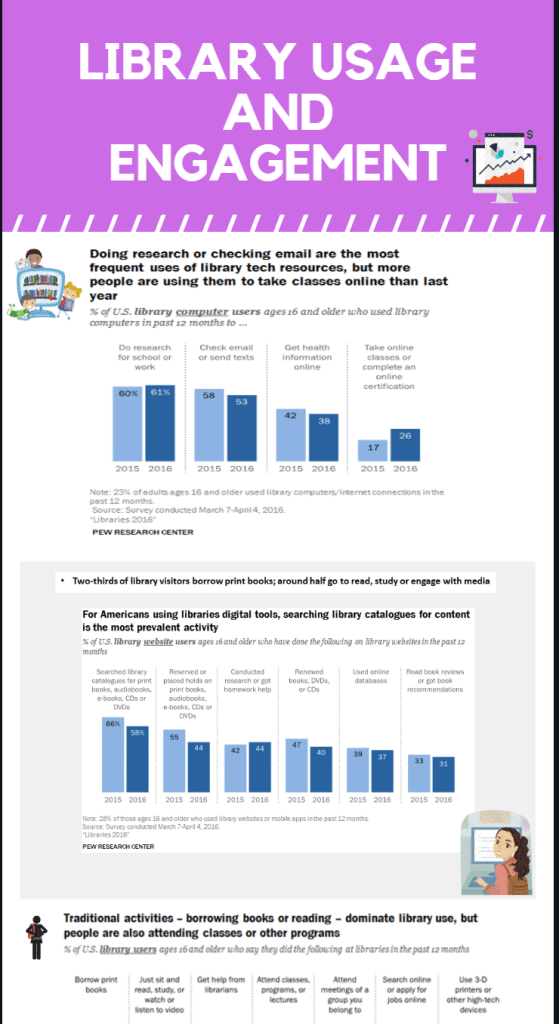
As we teeter through this period of industrial revolution, it is imperative to adjust to the needs of our ever changing economy. With advances in technology one might say that libraries are things of the past and there are no longer an essential part of the culture. It is up to the library as an institution to stay abreast of use this evolution as a means of discovering, acquiring, and developing information. “A world of customer experiences, data-based services, and asset performance through analytics, meanwhile, requires new forms of collaboration, particularly given the speed at which innovation and disruption are taking place” (Schwab Dec. 12, 2015 https://www.foreignaffairs.com/articles/2015-12-12/fourth-industrial-revolution). In learning HTML coding I can see the library having coding clubs to teach both children and adults how to create websites and animated games or stories. Providing digital maker labs where patrons have access to cutting-edge technology like 3D printers, providing classes to teach digital storytelling so patrons can create interactive stories and have control over the flow of narration. Virtual reality is also a growing trend where users have the ability to take virtual tours or virtual workshops and trainings, or even something as simple as incorporating self-service spaces where patrons can use kiosks to self-out or in their own library materials or have access to cloud printing, copying, and scanning.
Libraries need to stay competitive in our fast paced world as the need for receiving information instantaneously is quickly growing. People want to be able to access information as effortlessly as they can in the least amount of time possible. “To make the world a better place, we need to start paying attention to the different tools that are emerging and learn to frame hard questions about how they should put to use to improve the lives of everyday people” (Boyd Jan. 25, 2016 https://points.datasociety.net/what-world-are-we-building-9978495dd9ad). The ways in which we can integrate technology into the library space is endless, and the more we embrace these technological advancements the more society is open to making the library space an essential part of their everyday lives.
Works Cited
Boyd, Danah “What World Are We Building” Jan. 25, 2016 https://points.datasociety.net/what-world-are-we-building-9978495dd9ad
Garland, John “Current Technology Trends In Libraries”
https://princh.com/current-technology-trends-in-libraries/#.XfEq-VdKjD4
O’Neil, Kate “The Tech Humanist Manifesto” July 28, 2017 https://medium.com/intuitionmachine/the-tech-humanist-manifesto-bf9ebaa1e45f
Schwab, Klaus “The Fourth Industrial Revolution” Dec. 12, 2015 https://www.foreignaffairs.com/articles/2015-12-12/fourth-industrial-revolution




 Peyton's Blog